In May, I wrote that cybersecurity training is broken and I was building a game instead. I said it would launch in a few weeks. It’s live. cyberlingz.com. Season 01, in your browser, no download, no installer. You can stop reading now and go play it – honestly, that’s the better version of this blog post.
Here’s the trailer, if you’d like the thirty-second argument first:
Still here? Fine. Here’s what launched, and what I learned building it.
What Season 1 actually is
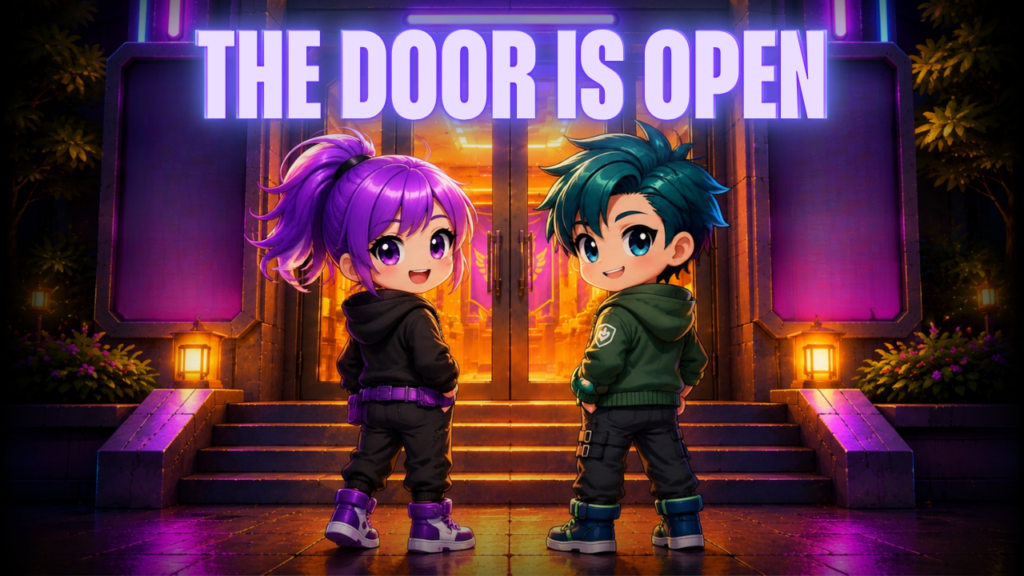
Season 1 is called First Breach. Cyber City – the neon city Willow, Kai and ARIA live in – is protected by a single dome. The dome is cracking. Your job is to help hold it together.
That’s the whole pitch a player gets, and that’s deliberate. Nobody in Cyber City sits you down to explain what a firewall is. You run one. Nobody quizzes you on prioritisation under pressure. You triage failing systems while ARIA passes deadpan judgement on your choices. The skills are in the missions the way protein is in dinner – present, load-bearing, and never once announced.
If you read the May post, you know why I built it this way: awareness training fails through fear or through condescension, and the fix isn’t better lectures. It’s building something people actually want to be inside. I’ve spent months applying one filter to every design decision – would this make someone want to be in Cyber City? – and cutting everything that failed it. What survived is a game, not a module.
Who it’s for (still everyone)
The nine-year-old plays it as a mission game with characters they’ll want on a lunchbox. The adult who has click-nexted through a decade of compliance modules plays it as the version of that training that respects them. Same city, same humour, same ARIA – she is exactly this sarcastic with everyone, regardless of age. Difficulty scales; dignity is constant.
What’s free
Mission 01 is free, in full, forever. The story hub, the first Intel Lab cases, the Byte Shop and the Cyber Garden come with it, along with everything your child earns in them – plus a parent dashboard, so you can see what they’re learning without paying anything. Not a demo. Not a trial that quietly expires. If you never pay, you still get a whole mission, start to finish, and the reflexes it builds.
For families who want more, Cyber+ unlocks the rest of Season 01, Hard mode across every mission, family profiles, the full parent dashboard, the live events, and every season that follows. The dashboard is the one built on the coach-not-warden principle from the May post: visibility that gives you something to talk about at dinner, not surveillance software with a friendly logo.
Founding member pricing is capped at 200 places in South Africa and 200 for everywhere else, and it’s locked in for as long as you stay subscribed. That offer was a promise to early adopters, and it’s being kept.
Also being kept: no ads, no loot boxes, no pay-to-win, no data sold to anyone. Those weren’t launch-marketing lines. They’re architecture.
What I learned shipping it solo
Three things, briefly.
- Shipping beats polishing. There are a hundred things I still want to improve, and the list will outlive me. At some point the most useful feature you can add to a game is the ability for people to play it.
- Constraints are a style. Everything in Cyberlingz – the art, the music, the voice – was made by one person with a small toolkit and a locked colour palette. The limitations stopped being obstacles and became the look.
- The audience decides what you built. I built a cybersecurity game. Whether players experience it as that, or as a story about a cracking dome and a sarcastic AI, is now up to them. I know which one I’m rooting for.
What’s next
One date for your calendar: 24 September. That’s when Cyber City’s first live event opens – a 10-day, subscribers-only storm that hits the dome and asks players to hold it together in real time. I’m saying nothing else about it yet, partly for drama and partly because half the fun of a live event is not knowing what’s coming. Cyber+ members will be inside. Everyone else will hear about it afterwards, which is its own kind of motivation.
Go play it
cyberlingz.com. Browser. Free. Ninety seconds from reading this sentence to running your first mission.
And if you play it – as a parent, a teacher, a security professional, or a person who just likes neon cities – I genuinely want to know what you think. Drop me an email or contact me on our socials, whichever you prefer. Everything sent through it gets read by the one person who built the thing it’s about.
The dome’s cracking. The door’s open.